COMMON SEARCHES
POPULAR PAGES
RESOURCES
Quality Programs
Annual preventive visits and cancer screenings: A shared opportunity to support patients
July 9, 2026
Annual preventive visits and recommended breast, cervical, and colorectal cancer screenings help detect concerns early, and support timely follow-up care.
Premera reinforces this work through outreach that reminds eligible members to:
- Schedule preventive visits
- Complete screenings
- Connect with a primary care provider and understand the next steps
Support includes digital messages, mail, scorecards, home test kits for colorectal cancer screening, and access-focused programs like mobile mammography.
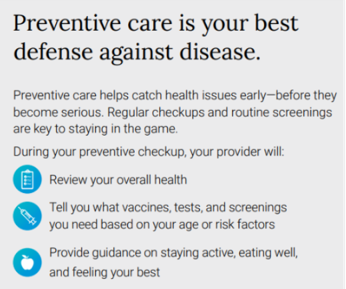
Annual preventive visit
- What members hear: We encourage members to schedule an annual preventive visit with their primary care provider.
- Why it matters: These visits are an opportunity to review overall health, stay up to date on recommended care, and identify next steps based on age, history, or risk factors.
Sample communication:
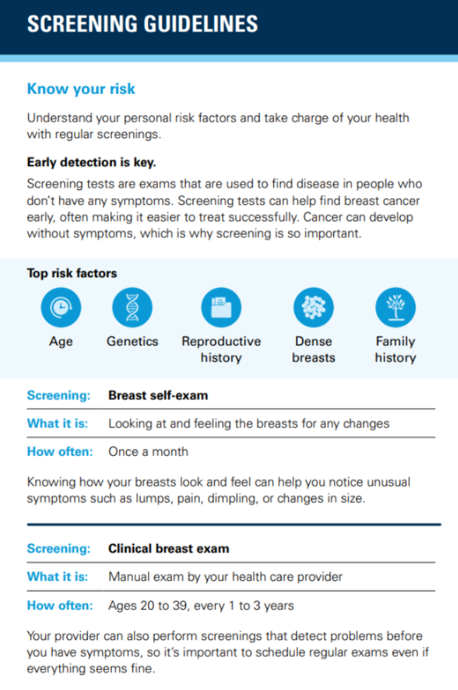
Breast cancer screening
- What members hear: Members may receive reminders about breast cancer screening, including mammograms, based on age and eligibility.
- Why it matters: Our outreach encourages timely screening, helps members understand the importance of early detection, and supports them in taking the next step toward scheduling care.
Sample communication:
Cervical cancer screening
- What members hear: Our communications remind eligible members about cervical cancer screening, such as Pap and HPV tests.
- Why it matters: These messages reinforce recommended screening timelines, promote early detection, and encourage members to talk with their provider about the screening option that is right for them.

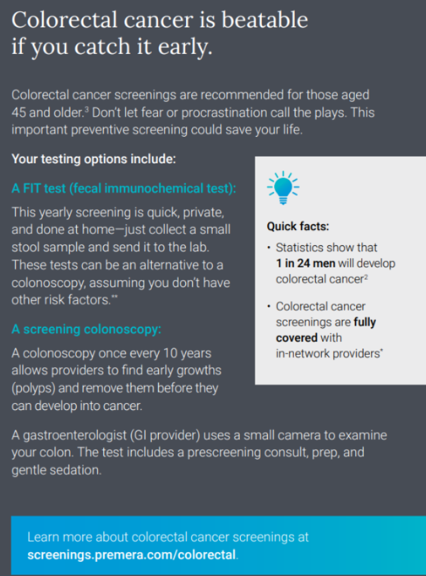
Colorectal cancer screening
- What members hear: Members may receive reminders about colorectal cancer screening, including colonoscopy and home test kit options.
- Why it matters: Outreach is designed to make screening more approachable, explain available next steps, and encourage members to complete screening in coordination with their provider.
Sample communication: